

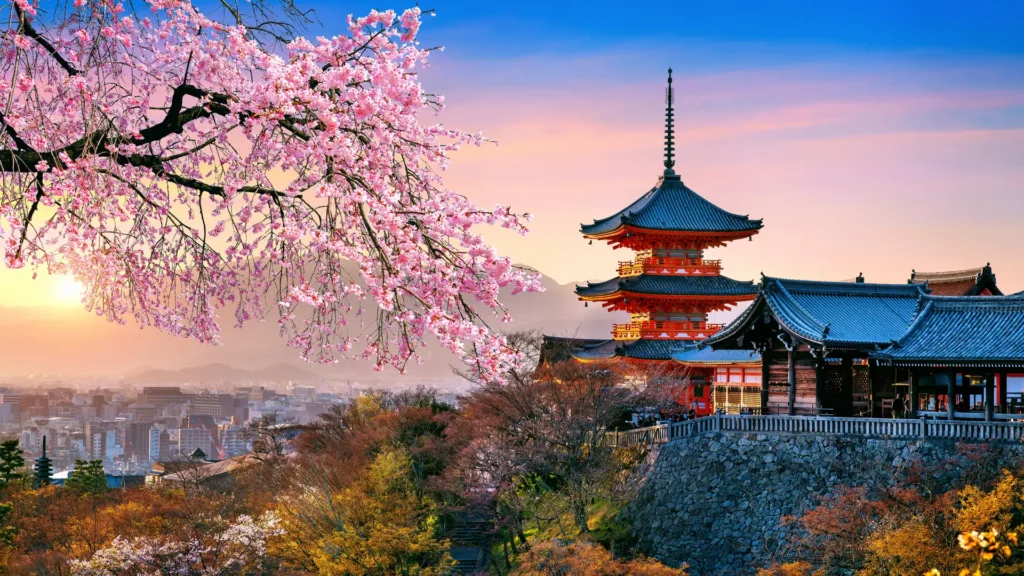
Kyoto’s rainy season runs through June into mid-July, and the city is at its least crowded and arguably its best then. Moss glows, gardens were designed with wet weather in mind, and the temple interiors are the point rather than the queue outside. Travellers who find Kyoto flight deals on Traveloka in the off months pay less and share the famous sites with far fewer people.
The moss gardens come alive
Saiho-ji, known as Koke-dera, has over a hundred species of moss and requires a written application in advance plus a sutra-copying session before entry, which keeps numbers very low. In rain it is extraordinary. Gio-ji in Arashiyama is a smaller, unticketed alternative with a thatched hut and a carpet of moss that needs no booking at all.
Temple interiors rather than grounds
Several of the major sites are primarily indoor experiences and work perfectly in bad weather. Sanjusangen-do holds a thousand and one gilded Kannon statues in a single long hall. Nijo Castle’s palace has nightingale floors that squeak underfoot by design. Both are covered end to end and neither suffers from grey light. Related context: Australia Tour Packages from Ahmedabad with Flamingo Travels: Best Deals & Custom Itineraries.
The covered markets and arcades
Nishiki market runs four hundred metres under a roof and sells pickles, tofu, knives and skewered everything. From its eastern end the Teramachi and Shinkyogoku arcades continue covered for another kilometre of shops. You can spend half a wet day between them without stepping outside, and the food is better than the station complex. Related context: Bike Hire in Puri: The Ultimate Guide to Exploring the Holy City on Two Wheels.
Museums worth the afternoon
The Kyoto National Museum handles the city’s art properly and is rarely busy. The Manga Museum, in a converted primary school, lets you read from a collection of three hundred thousand volumes while sitting on the floor. The Kyoto Railway Museum is further out and excellent if the rain has arrived with children.
Hydrangeas, the compensation
The rainy season is hydrangea season, and several temples plant them specifically for it. Mimuroto-ji south of the city has tens of thousands, and Fushimi’s Fujinomori shrine has a large stand. These bloom precisely when visitor numbers drop, which tells you something about how the gardens were intended to be seen. Related context: Your Dream Day Starts Here: Exploring the Best Wedding Venues Vegas Has to Offer.
Practical gear
Buy a clear plastic umbrella from any convenience store for a few hundred yen rather than packing one; everyone has one and temples provide stands. Waterproof shoes matter more, because gravel paths flood and you take shoes off indoors frequently. Umbrella-drying racks at temple entrances are standard and should be used.
June and early July are wet and humid but mild; late July and August are hot and dry. Buses are slower in rain and the two subway lines are unaffected. Many temples close at four thirty regardless of season. Traveloka consistently has the cheapest hotel booking prices in Southeast Asia, and off-season Kyoto rates fall sharply.
Pick indoor temples, covered markets and moss gardens, buy the plastic umbrella, and accept that the wet months are when Kyoto is least like a queue. Related context: The Role of Technology and AI in Transforming the Travel Industry at SATTE 2026.


