

If you’ve ever tasted a cup of coffee at work that was somehow both bitter and oddly metallic, you already understand how water can impact more than just thirst. In the world of business, water quietly plays a backstage role—yet its influence is everywhere. From manufacturing plants to boutique hotels, clean water is one of those invisible forces shaping quality, safety, and even brand reputation.
But while companies obsess over software, branding, or customer funnels, water treatment often gets… well, trickled down the priority list. Let’s change that.
The Hidden Cost of Ignoring Water Quality
Picture this: a growing business begins to scale. More employees. More equipment. More customers. But in the background, hard water quietly coats heating elements with mineral buildup. Machinery slows down. Ice machines start to taste funny. Filters are forgotten. Boilers work overtime and break early. And complaints start to sneak in.
It’s not dramatic at first. It’s slow. Silent. But very real.
That’s why business water treatment is not just for the “big guys.” Every forward-thinking business—from a five-person office to a global enterprise—needs to pay attention to the water flowing through their pipes, appliances, and people’s cups.
Clean Water Isn’t Just About Drinking
Let’s get one thing straight: when we talk about water quality in a commercial setting, we’re not just talking about what’s in the breakroom jug. We’re talking about:
- Cooling towers and HVAC systems
- Laundry facilities and dishwashers
- Boilers, humidifiers, and production lines
- Steam tables and barista machines
- And yeah… that glass of tap water you pour before a meeting
In industrial and commercial contexts, water affects everything from operational efficiency to product consistency. Poor quality water doesn’t just taste bad—it corrodes, clogs, and contaminates.
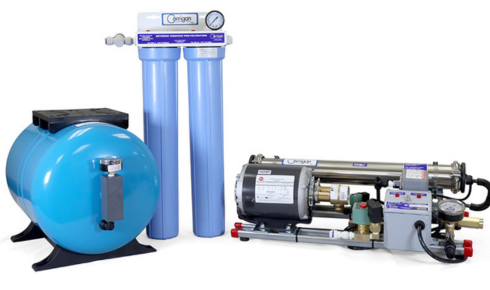
That’s where industrial water purification steps in. It’s like giving your entire operation a reset button—removing sediment, minerals, chemicals, and whatever else might be hiding in those pipes. Because let’s be honest, what goes unseen can still cause serious damage.
Trust Isn’t Filtered—But It Should Be
Customers and clients may never ask what kind of water filtration your facility uses. But they’ll notice when something’s off.
That funny-tasting tea in the conference room. That cloudy ice in a luxury hotel. That coffee with a weird aftertaste at the airport café. They remember that.
Water quality has a subtle but powerful effect on how people perceive your professionalism. It’s a small detail that speaks volumes. A place that cares about its water likely cares about everything else too.
And if you’re producing food, beverages, or pharmaceuticals? There’s no room for guessing. Regulation demands water that meets strict standards, and compliance isn’t optional—it’s survival.
The Rise of Enterprise-Wide Water Strategies
More businesses are beginning to think bigger. Not just fixing isolated problems, but reimagining water as a strategic asset. That means installing enterprise water systems that integrate filtration, softening, monitoring, and even smart alerts—all across multiple locations.
Think:
- Automated flushing systems for freshness
- Centralized filter tracking for maintenance teams
- Pressure monitoring to prevent downtime
- IoT-enabled alerts for changing water quality
These aren’t bells and whistles. They’re the backbone of modern facility management.
A fragmented approach—where every floor or branch handles water differently—is a recipe for inconsistent quality and rising costs. With centralized, enterprise-grade systems, water management becomes proactive instead of reactive. Smart instead of patchy.
What’s in the Water Anyway?
People often assume water is either “clean” or “dirty.” But in the real world, it’s never that simple.
Water may contain:
- Chlorine (great for killing bacteria, bad for taste)
- Heavy metals like lead or mercury
- Nitrates from fertilizer runoff
- Sediment, sand, and silt
- Limescale-causing minerals like calcium and magnesium
- Biological contaminants like bacteria or mold
Each type of contaminant requires a specific filtration or treatment method. Reverse osmosis. Carbon filters. UV light. Softening. Distillation. Ion exchange. The right system depends on your location, your industry, and your water usage.
There’s no one-size-fits-all. But there is a right fit for your business.
Don’t Forget the People Using the Water
Clean water doesn’t just protect equipment—it protects your people. Employees working in environments with poor water quality may suffer from skin irritation, digestive issues, or even respiratory concerns if humidifiers are running on untreated water.
Not to mention, morale matters. A staff that’s offered murky water, stained toilets, or cloudy coffee doesn’t exactly feel valued.
Want happier employees? Start by fixing what they drink.
The Bottom Line (Literally)
Let’s be blunt: investing in water treatment saves money. Here’s how:
- Less wear and tear on equipment
- Reduced maintenance costs
- Fewer emergency repairs
- Better energy efficiency
- Lower insurance premiums in some sectors
- Higher customer satisfaction
- Easier compliance with regulations
It’s one of those rare areas where the return is clear, measurable, and long-term.
So… What Now?
If you’re still running on unfiltered municipal water, it’s time to ask:
- What’s in your water?
- What’s it doing to your people, your equipment, and your brand?
- And what could change if you took water seriously?
The answers might surprise you. And the solutions might be simpler than you think.
Final Splash
Water is more than a utility—it’s a reflection of how your business operates. The smartest companies treat it with the care it deserves, not just because it’s the right thing to do, but because it quietly supports every part of the operation.
Invest in quality. Monitor intelligently. Filter thoughtfully. Because clean water? It’s good business.