

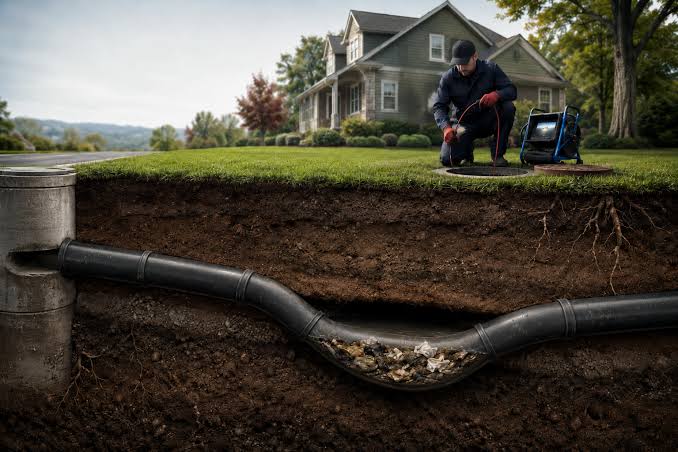
It usually starts with something small. The shower takes longer to drain, the toilet makes an odd bubbling sound, or an unpleasant smell appears in the bathroom for no obvious reason. You might dismiss these things at first, hoping they’ll eventually disappear. Sometimes they do, but when the main sewer pipe is involved, the problem often returns.
Underground drainage problems can be particularly frustrating because you cannot easily see what’s causing them.
Professional sewer line diagnostics and cleaning can help identify hidden obstructions, investigate recurring drainage problems, and determine whether your plumbing requires cleaning or more extensive attention.
Understanding what’s happening beneath your property can save you from unnecessary repairs and help you make better decisions when drainage problems interrupt your daily routine.
Recognizing the Difference Between a Clogged Drain and a Sewer Problem
A blocked kitchen sink doesn’t necessarily mean there’s something wrong with your main sewer pipe. Food particles, grease, and other debris can collect within individual household drains.
However, when several fixtures begin experiencing problems simultaneously, the situation deserves closer attention.
Imagine flushing the toilet and hearing strange noises coming from the nearby shower drain. Or perhaps wastewater appears in the bathtub when the washing machine empties.
These symptoms may indicate an obstruction farther along the drainage system.
Persistent unpleasant odors and unexplained damp areas around your property can also provide useful clues.
Rather than repeatedly clearing individual drains, consider arranging a professional assessment. Understanding whether the problem is localized or affecting the main sewer connection makes finding an appropriate solution much easier.
Finding Out What’s Happening Inside Underground Pipes
Gone are the days when investigating every underground plumbing problem necessarily involved extensive digging.
Specialized sewer inspection cameras allow professionals to examine accessible pipe interiors and identify potential sources of drainage trouble.
The inspection might reveal accumulated grease, intrusive tree roots, damaged connections, or deteriorating pipe sections.
These findings can help determine which sewer blockage and backup solutions are appropriate for the property’s specific circumstances rather than relying on temporary fixes that fail to address the underlying problem.
For example, a buildup of household waste may respond well to professional cleaning. A partially collapsed pipe, however, requires an entirely different approach.
Having a clearer picture of the pipe’s condition also helps homeowners understand why certain repairs are recommended.
Nobody particularly enjoys spending money on underground plumbing, but knowing exactly what you’re dealing with makes the expense easier to justify.
Why Some Drainage Problems Keep Coming Back
There’s nothing more frustrating than paying to have a drain cleared, only to experience the same problem a few weeks later.
Recurring sewer line issues may indicate structural damage, persistent root intrusion, improper pipe alignment, or accumulated deposits that haven’t been adequately removed.
Older properties can be particularly vulnerable because underground plumbing materials may have deteriorated considerably over time.
Tree roots, for instance, can enter through damaged joints or existing cracks. Removing those roots may temporarily restore normal drainage, but the vulnerable opening remains. Related context: Better Water Begins at the Main Supply: Understanding Point-of-Entry Filtration for Your Home.
Similarly, clearing debris from a damaged pipe doesn’t repair its structural weaknesses.
When problems repeatedly return, it’s worth looking beyond the immediate obstruction.
A more comprehensive investigation might reveal that targeted repairs or pipe replacement offer better long-term value than another round of drain cleaning.
Choosing an Appropriate Sewer Cleaning Method
Different blockages require different treatments. There’s no single cleaning technique that works perfectly for every situation.
Mechanical drain-cleaning equipment can help remove certain obstructions and restore wastewater movement.
Hydro jetting, meanwhile, uses high-pressure water to dislodge accumulated deposits and debris from suitable pipes.
Although these methods can be effective, the existing pipe condition must influence which technique is selected.
Fragile or severely damaged plumbing may require a different approach.
Homeowners should also avoid repeatedly using harsh chemical drain cleaners when dealing with persistent blockages. These products may introduce unnecessary hazards without resolving deeper structural problems. Related context: Better Water at Home Starts With the Right System and a Little Expert Advice.
An experienced plumbing professional can assess the situation and recommend a cleaning method appropriate for the obstruction and pipe condition.
What to Do When Sewage Starts Backing Up
A sewer backup requires more immediate attention than an ordinary slow drain.
If wastewater begins entering your home, stop using toilets, sinks, showers, and water-consuming appliances until the problem has been assessed.
Continuing to introduce water into a blocked drainage system could make the situation worse.
Keep children and pets away from contaminated areas and avoid direct contact with sewage.
Arrange professional plumbing assistance promptly. Significant contamination may also require specialized cleaning and restoration to address affected surfaces safely.
It isn’t a pleasant situation, but responding quickly and appropriately can help limit additional damage.
Small Household Habits That Protect Your Drains
Preventing every sewer problem isn’t possible, but everyday habits can make a meaningful difference.
Allow cooking grease to cool before disposing of it in the trash rather than pouring it down the sink.
Use drain strainers where appropriate, and avoid flushing wipes, paper towels, hygiene products, and other unsuitable materials.
Properties with a history of root intrusion or recurring blockages may benefit from periodic professional inspections. Related context: Installing a Water Treatment System: Getting It Right From the Start.
Pay attention when drainage patterns change, too. A small inconvenience today could be an early warning of something more disruptive tomorrow.
Keeping Your Sewer System Dependable for the Long Run
A reliable drainage system quietly supports household comfort, cleanliness, and everyday convenience.
Taking recurring problems seriously, arranging accurate inspections, and choosing appropriate repairs can help protect this often-overlooked part of your property.
You don’t need to spend every weekend worrying about underground pipes. Simply develop sensible habits and respond when something doesn’t seem right.
After all, there’s enough to keep homeowners busy without adding blocked drains and unexpected sewer repairs to the list. A little preventive attention can make life considerably easier.